
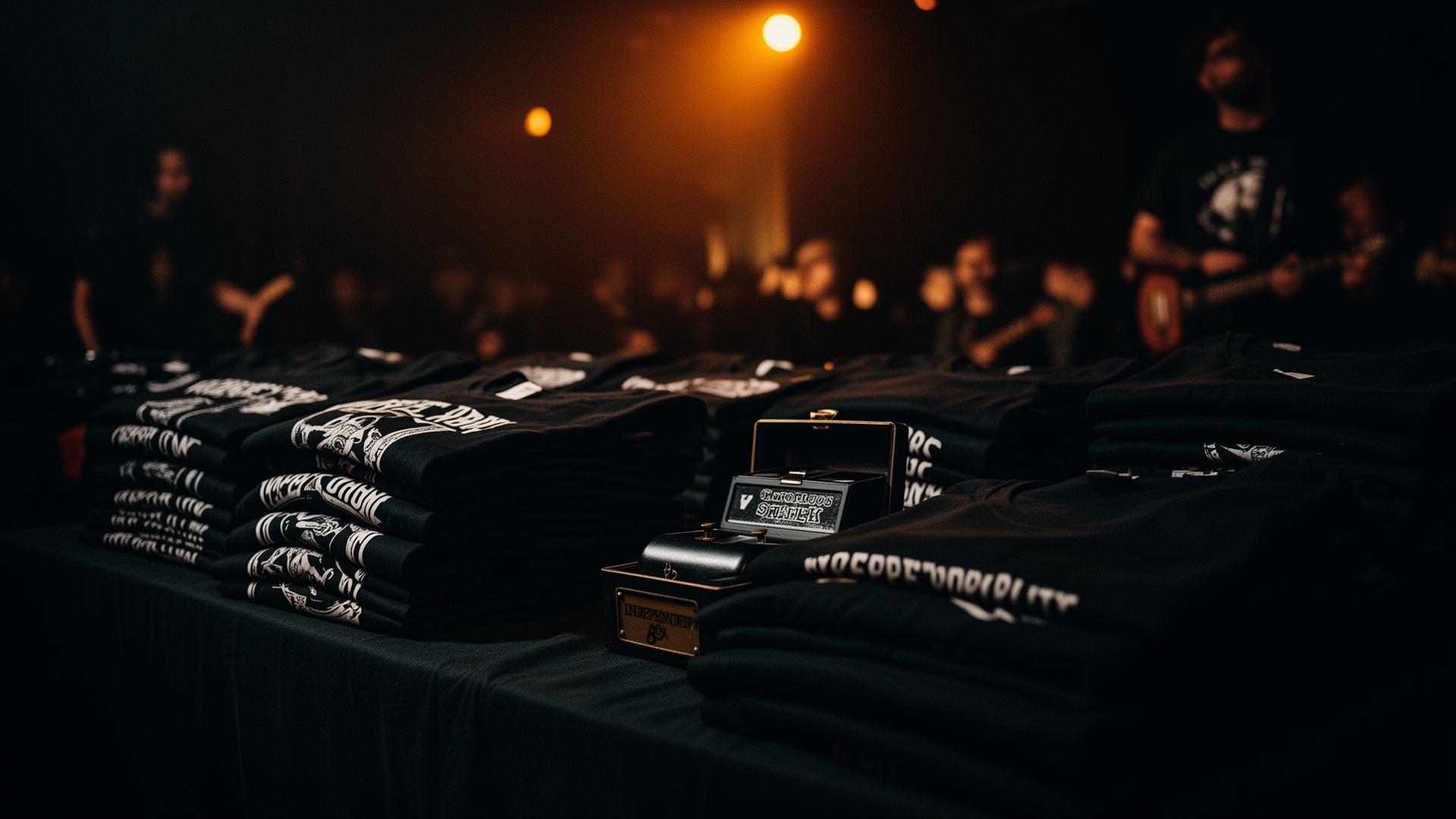
Start with merch. Build the catalog. Own the room.
BLK-T Shirt Co. · · 7 min read
If you're an independent artist reading this, you've probably had the same conversation with yourself a hundred times: I'll do merch when I'm bigger. When more people know the name. When the streams hit a number that feels real. When there's budget. When there's time.
We've been printing for bands, solo acts, DJs, comedians, podcasters, and one-person creative empires for years, and we'll tell you flat out — that thinking is backwards. The artists who treat merch as a launch tool instead of a reward end up with deeper fan economies, fund their next record, and turn a folding table at a 60-cap room into a real storefront. The ones who wait keep waiting.
This is the playbook we wish every emerging artist had on day one. Established artists, hang around — the sequencing in the back half still applies.
The first shirt matters more than the tenth.
The first time a fan walks out of your show wearing your name on their chest, something quiet and permanent happens. They're no longer an audience member. They're a billboard, a recommender, and a returning customer all at once. That single t-shirt does more brand work in a year than three months of paid ads ever will — because it's worn by someone who already chose you.
Fans aren't waiting for you to feel ready. They're waiting for something to buy. Every show without merch is a room full of people who liked you enough to show up but had nothing to take home. That's not a small loss — that's the loss.
"Every show without merch is a room full of people who liked you enough to show up but had nothing to take home."
What "starting" actually looks like.
Starting doesn't mean a full catalog. It means one strong design, on one good garment, in a small run. That's it. Most of our first-time artist orders are 30 to 48 pieces — enough to fill a couple of shows or a small online drop, small enough that the upfront cost won't keep you up at night.
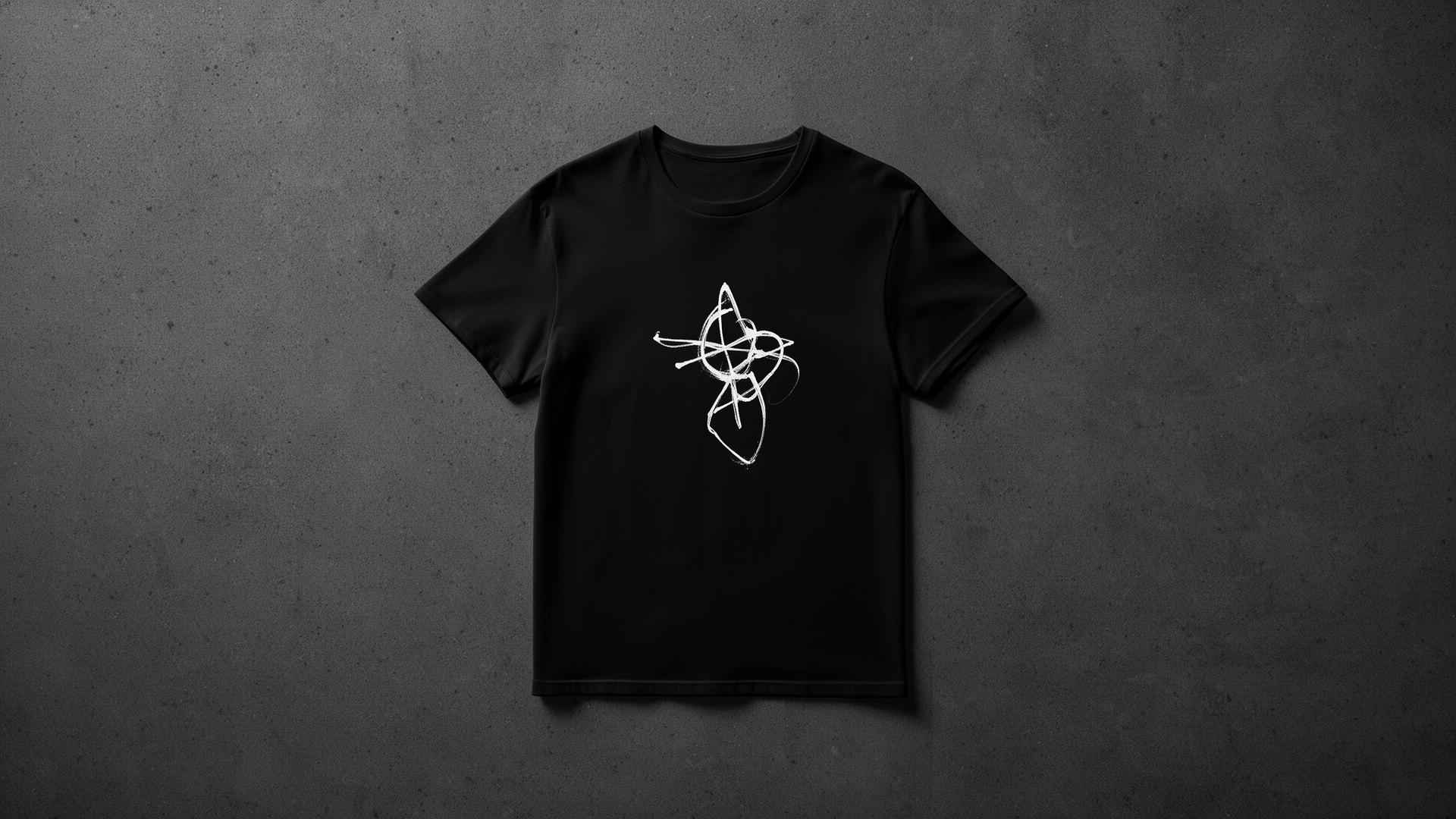
Pick a design that means something to the project — a lyric, a symbol, an album mark, the name set in a font that feels like the music. Don't try to be clever. Be unmistakable. Then put it on a garment people actually want to wear: a heavyweight tee in black or off-white from a catalog like American Apparel, Bella+Canvas, or Gildan. Price it for the room you're playing, not the warehouse you don't have yet. $25 to $35 covers your cost and pays you back fairly.
The catalog compounds.
Here's the part most artists miss: your second drop sells to your first drop's customers. The fan who bought the tee in March is the one most likely to buy the long-sleeve in October — because they already proved they'll spend money on your name. They're not a stranger anymore.
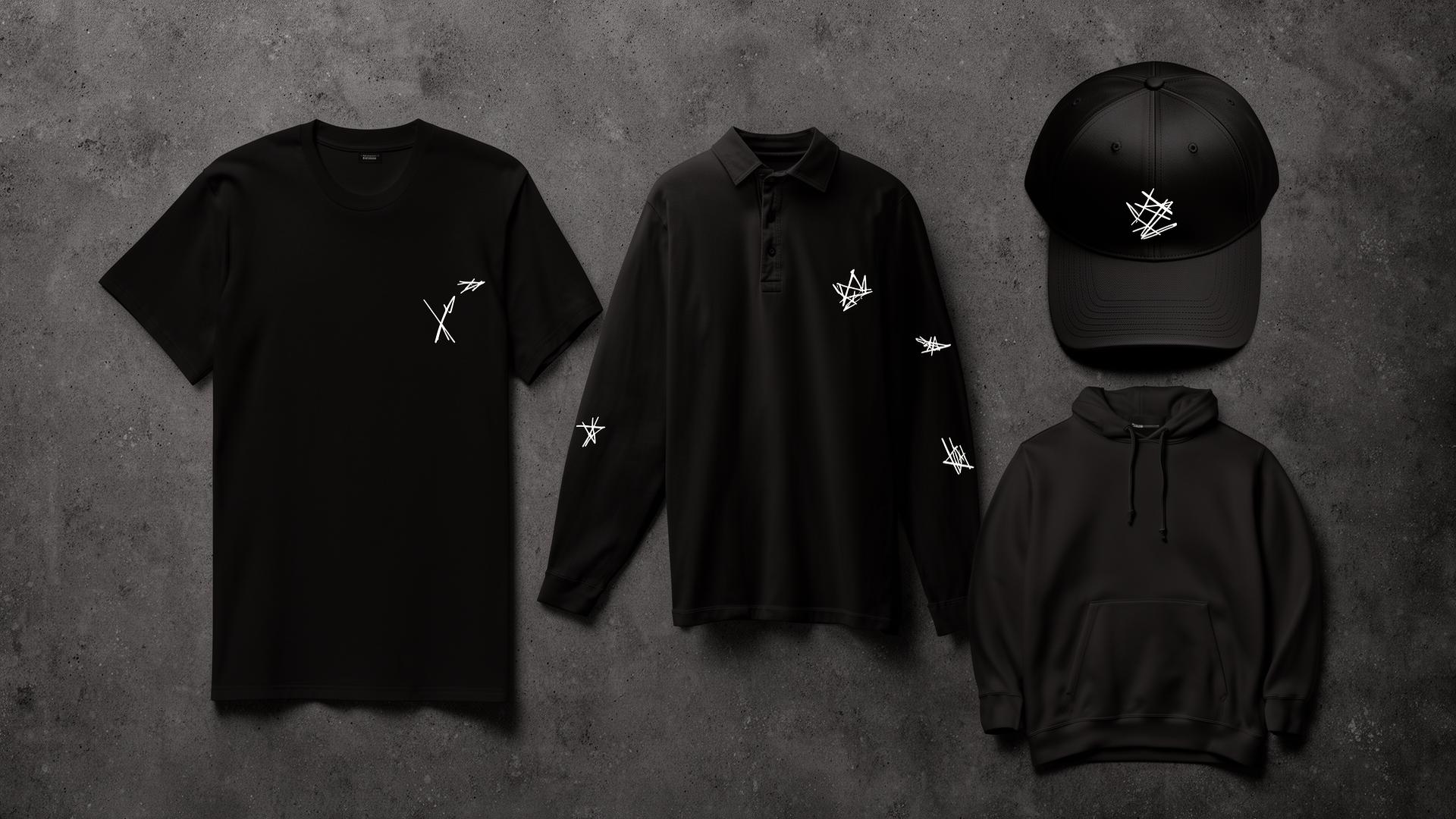
A catalog of two pieces outperforms a single piece by way more than 2×. Add a hat. Add a hoodie before winter. Add an alternate colorway of the same tee. Each new SKU multiplies what your most loyal fans can spend, without forcing you to find new fans. That's compounding revenue with the audience you already have.
From folding table to online storefront.
The folding table at the back of the venue is the best market research you'll ever pay for. You learn what fits, what sells out, what colors fans actually reach for, what price point gets a nod and which one gets a winced "maybe next time." Run two or three tours' worth of in-person sales before you build the online shop.
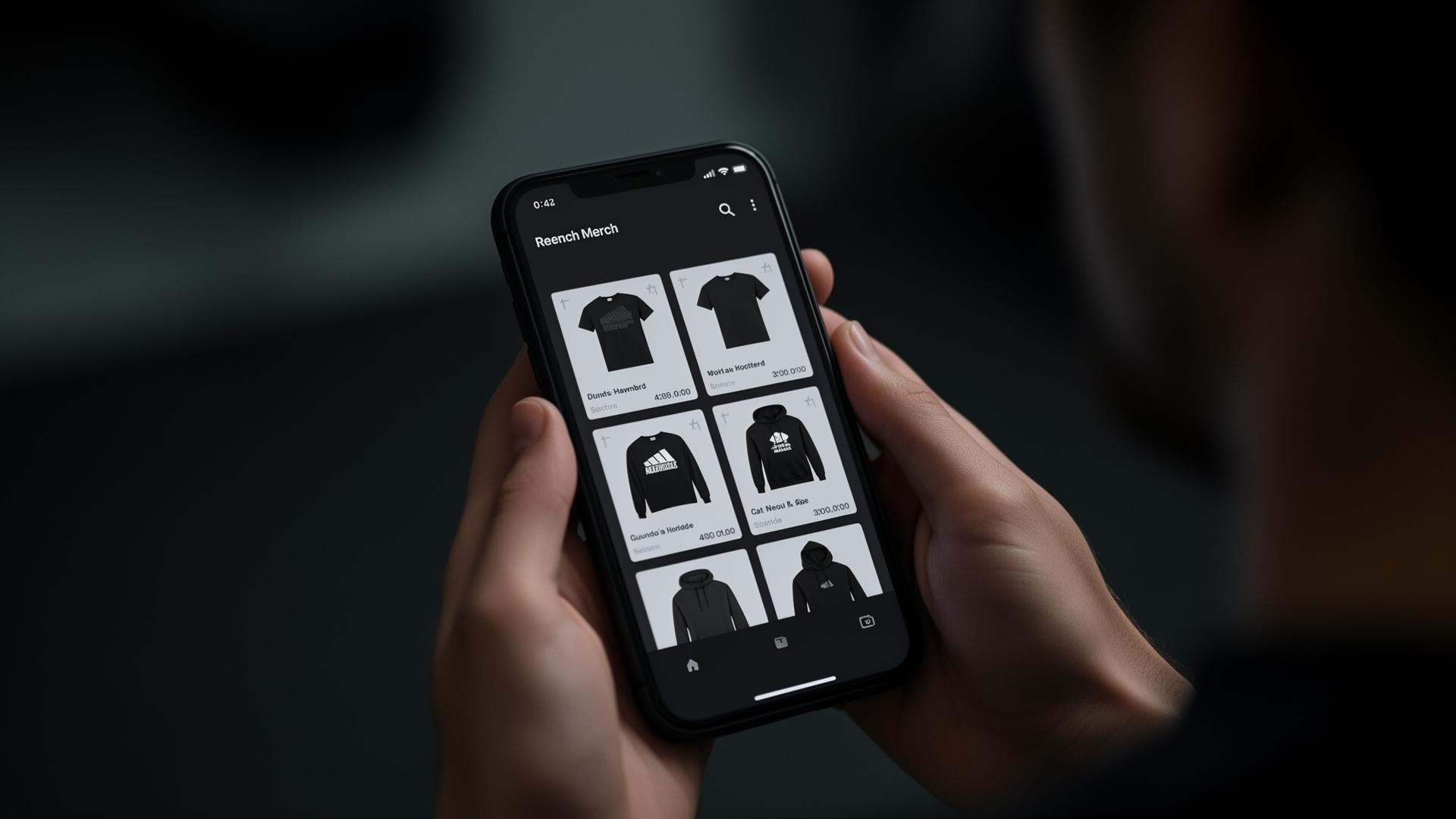
When you're ready to graduate online, you have two paths. Hold inventory of the proven sellers — the designs and sizes you already know move — and run print-on-demand for the long tail (alternate colors, oddball sizes, one-off variants). Tie new drops to release weeks: a single drops Friday, a matching tee drops with it. A tour announcement gets a tour-only colorway. The merch becomes part of the release calendar, not an afterthought to it.
The math nobody shows you.
Let's be unromantic about it for a second. A 50-piece run of tees at a $30 retail price is $1,500 gross. After garments, decoration, and shipping, you're keeping somewhere between $700 and $1,000 in your pocket — from one design, on one night, in one room of people who already like you.
Streaming royalties pay roughly $0.003 to $0.005 per play. To match what you'd net from selling 30 shirts at a single show, you'd need somewhere in the neighborhood of 150,000 to 200,000 streams. Not in a month. Total.
"One night of selling 30 shirts can outpay six months of streams."
This isn't a knock on streaming. Streaming is discovery. Merch is income. They do different jobs, and only one of them pays your rent.
What to make next.
Once the first design proves itself, sequence your drops like a release calendar. The order that consistently works for the artists we print for:
- Tee #1 — the flagship design, the one fans associate with the project.
- Long-sleeve or crewneck — same design, seasonal upgrade, higher price point.
- Headwear — a dad hat, six-panel, or beanie. Low risk, high margin, year-round.
- Hoodie — drop before October. This is your highest-revenue single SKU once you have it.
- Second design — a tour-only, single-only, or alternate-colorway tee that gives existing fans a reason to come back.
- Accessories — totes, patches, stickers, posters, koozies. Cheap impulse buys that round out a cart.
- Limited editions — numbered runs, signed inserts, color variants. Scarcity moves what evergreen can't.
That sequence doesn't have to take years. Most of the artists we work with cycle through the first five inside 12 to 18 months, funded almost entirely by sales of the piece before it.
Where we come in.
We started BLK-T Shirt Co. because the print shops we knew either treated small runs as an annoyance or quoted them like a corporate order. Neither one helps an artist get started. Our minimums are 30 pieces for screen printing and 12 for embroidery on purpose — that's the number that makes a first drop feel possible, not punishing.
We're real humans in Vancouver, BC, printing for Canadian and US artists across embroidery, silk screen, heat transfer, and DTF. You email us, a human emails you back, usually the same day. We'll help you pick the right garment, the right decoration, and the right quantity — even if "right" means smaller than you thought.
If your artwork isn't print-ready yet, that's solved too. Our exclusive design partner, Art Szabo Creative, handles brand identity, illustration, and print-ready files for artists who need the visual side built out before they can ship anything. Designed, created, and refined — so the file you send us is ready to make something cool.
Start with one shirt. Build the catalog from there. The fans are already in the room.